Understanding AI in Psychiatric Practice: What Clinicians Need to Know
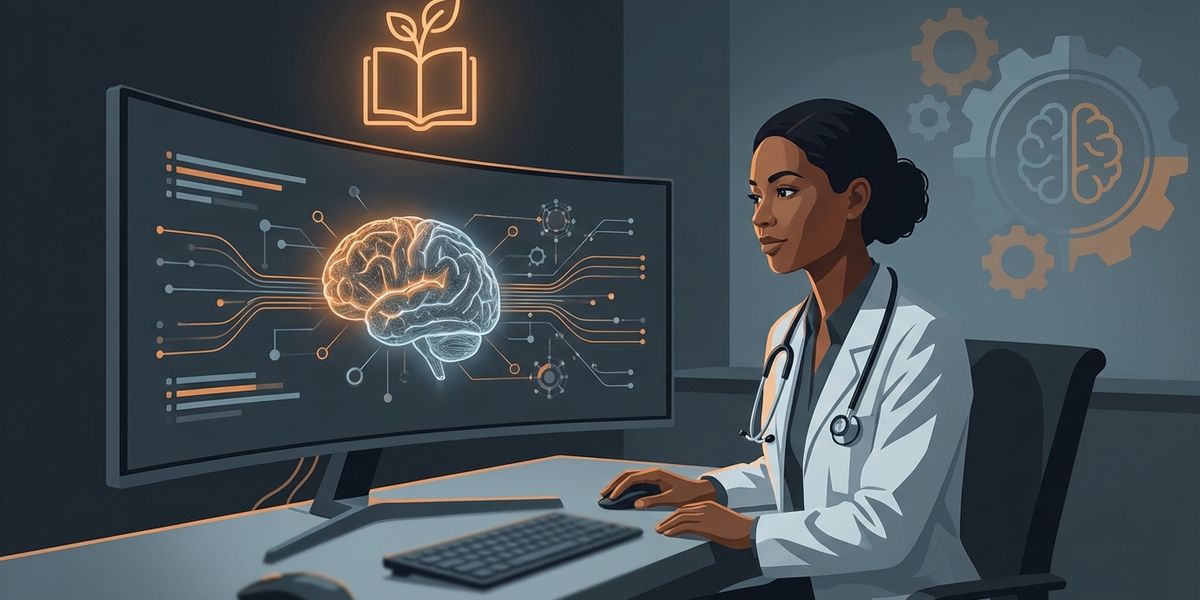
AI is transforming healthcare, but mental health requires special consideration. Here is what psychiatric providers should understand about AI tools—their capabilities, limitations, and ethical implications.
Artificial intelligence has arrived in psychiatry. From documentation assistants to diagnostic support tools, AI is becoming part of mental health practice. But the technology that works for radiology or pathology requires careful adaptation for our field.
Why Psychiatry is Different
Mental health diagnosis relies on subjective report, behavioral observation, and clinical intuition developed over years of training. There is no blood test for depression, no imaging study that confirms PTSD. Our assessments integrate biological, psychological, and social factors in ways that resist simple algorithmic reduction.
This does not mean AI has no place in psychiatry. It means we need AI tools designed with these complexities in mind—tools that augment clinical judgment rather than attempting to replace it.
Current AI Applications in Mental Health
Documentation automation represents the most mature application. AI can transcribe sessions, structure notes according to your preferred format, and ensure nothing important is missed. This is augmentation at its best—handling tedious tasks so clinicians can focus on care.
Symptom tracking and pattern recognition show promise for treatment monitoring. AI can identify trends in patient-reported outcomes that might escape notice in busy clinical practice—early warning signs of relapse or treatment response patterns.
Clinical decision support is emerging but requires caution. AI can surface relevant research, flag potential drug interactions, or suggest evidence-based interventions. But recommendations must be clearly presented as suggestions requiring clinical judgment, not directives.
Ethical Considerations
Privacy stands paramount. Psychiatric information carries unique sensitivity—therapy content, trauma histories, substance use. Any AI tool must meet rigorous HIPAA standards and ideally exceed them. Patients must understand and consent to AI involvement in their care.
Bias in training data poses real risks. AI systems trained on populations that do not reflect your patients may perform poorly or perpetuate disparities. Clinicians must maintain critical evaluation of AI suggestions, particularly for underrepresented populations.
The therapeutic relationship cannot be automated. AI should never come between clinician and patient. Tools that require constant attention or disrupt session flow undermine the very care they aim to support.
Evaluating AI Tools for Your Practice
When considering AI adoption, ask critical questions: Was this trained on psychiatric data or adapted from general medicine? How is patient data protected and stored? Can the system be customized to your documentation preferences? What happens when the AI makes errors?
Look for tools built by clinicians who understand psychiatric practice. Generic AI adapted for mental health often misses crucial nuances. Purpose-built solutions designed from the ground up for psychiatry will serve you better.
AI in psychiatry is not about replacing human connection—it is about removing barriers to it. The right tools free us to be more present, more thorough, and more effective in the work that matters: helping people heal.
Canybec Sulayman, PMHNP-BC, MBA
Founder of Psynopsis. Dedicated to reducing documentation burden for mental health professionals.
Ready to reduce your documentation burden?
Join providers who are saving hours every week with Psynopsis.
Start Free Trial